
Fire, Water, and Mold Damage: A Homeowner's Guide to Restoration in Casper
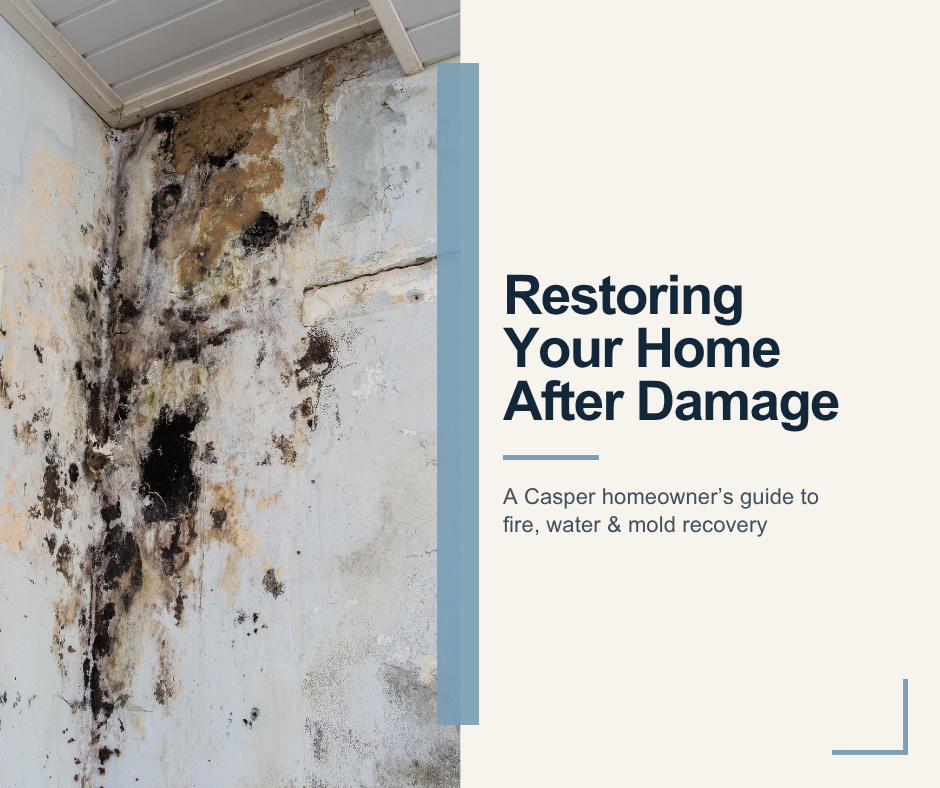
A calm, practical guide to safety, documentation, cleanup, repairs, and rebuilding after property damage.
Property damage can make a home feel unfamiliar in a matter of minutes. A burst pipe can soak flooring and drywall. A kitchen fire can leave smoke residue far beyond the room where it started. A slow leak can create hidden moisture and mold behind finishes. In each situation, the first decisions should protect people, limit additional damage, preserve useful documentation, and create a clear path toward repair.
For Casper homeowners, restoration is not simply cleaning what can be seen. It often involves the building envelope, insulation, electrical and mechanical systems, framing, finishes, and the way Wyoming weather affects drying and temporary protection. A coordinated plan helps move the property from immediate damage control to a safe, durable rebuild.
Safety Comes Before Cleanup
Do not enter a damaged area just to take photographs or retrieve belongings. Fire, water, and structural damage can create hazards that are not obvious from the doorway, including weakened floors, exposed wiring, contaminated water, sharp debris, unstable ceilings, smoke residue, and gas leaks.
Stay out if emergency officials have not cleared the property, if you smell gas, if water is near electrical equipment, if the structure appears unstable, or if smoke and airborne debris make breathing difficult. Ready.gov advises people not to enter a damaged home when authorities have not declared it safe, when gas may be present, or when flooding remains around the building.
If it is safe and you know how, shut off the source of clean water at the main valve. Do not operate electrical switches in a wet area. Do not disturb visible mold or soot without appropriate protection, because activity can spread particles into other parts of the home.
The First Steps After Property Damage
1. Confirm that the property is safe
Follow instructions from firefighters, utility providers, emergency responders, or local officials. Keep children, pets, and unnecessary visitors away from the affected area. Arrange temporary lodging when the home cannot be occupied safely.
2. Stop the source only when it is safe
Examples include closing a water valve, placing a container under a minor clean-water drip, or arranging an emergency roof covering after the structure has been assessed. Temporary measures should reduce exposure without creating a new hazard. Major electrical, gas, structural, sewage, or fire-related conditions require qualified help.
3. Document conditions before moving materials
Take wide photographs of each affected room, then closer images of damaged finishes, contents, equipment, and the likely source. Record the date the loss was discovered, what happened, who was contacted, and any immediate steps taken. Keep receipts for temporary protection, cleanup supplies, lodging, and repairs. Documentation can help the contractor build an accurate scope and can support communication with the insurance carrier, but coverage decisions belong to the insurer and the policy.
4. Notify the appropriate people
Contact the property owner or manager when applicable, then the insurance carrier if a claim may be involved. Ask what documentation the carrier wants, whether an adjuster must inspect before damaged materials are removed, and what emergency work is authorized. If cleanup cannot wait for an inspection, preserve detailed photographs, measurements, notes, samples when appropriate, and invoices.
5. Begin professional assessment and damage control
A restoration assessment should look beyond visible stains or debris. Moisture can migrate under flooring, into wall cavities, and through insulation. Smoke residue may move through doorways and mechanical systems. Mold can develop wherever moisture remains. The goal is to identify affected materials, control the source, define safe work zones, and determine what can be cleaned, dried, repaired, or replaced.
How Fire, Water, and Mold Damage Differ
Fire and smoke damage
Fire restoration begins only after the building is released for safe entry. The scope may include structural assessment, temporary weather protection, debris removal, smoke and soot cleaning, odor control, repairs to electrical or mechanical systems, and reconstruction. Smoke can travel beyond the burn area, and different residues may require different cleaning methods. Covering odor without removing the source does not restore the building.
Water damage
The water source changes the response. A recently broken supply line is different from groundwater, stormwater, or sewage. Contaminated water requires stricter controls and may make porous materials unsuitable for cleaning. Even clean water can become a larger problem when it remains in carpet, drywall, insulation, cabinets, or subflooring.
The EPA emphasizes drying water-damaged areas and materials quickly, generally within 24 to 48 hours when possible, to reduce the chance of mold growth. Proper drying is measured, not guessed. Restoration teams may track moisture in materials and the air until affected assemblies reach appropriate dry conditions.
Mold and moisture damage
Mold is a moisture problem first. Cleaning visible growth without fixing the leak, condensation, drainage issue, or humidity condition allows the problem to return. Disturbing mold can also release spores and fragments, so containment, protective equipment, and a work plan may be needed.
Small isolated areas may be manageable for some homeowners, but extensive growth, contaminated water, hidden damage, HVAC involvement, health concerns, or structural deterioration call for experienced professional evaluation. There is no single color or home test that tells the full story; the moisture source and affected materials must be understood.
What a Complete Restoration Process Looks Like
A clear restoration project usually moves through several connected phases. Some can overlap, but skipping one can create problems later.
Safety and stabilization: Confirm safe access, isolate hazards, and protect exposed areas from additional weather or water.
Assessment and documentation: Map affected rooms and materials, photograph conditions, identify the source, and develop a written scope.
Removal and cleaning: Remove debris and materials that cannot be safely restored; clean salvageable surfaces and contents using methods appropriate to the damage.
Drying and environmental control: Use air movement, dehumidification, containment, and monitoring as the conditions require. Equipment alone is not proof that materials are dry.
Verification before rebuilding: Confirm that the moisture source is corrected, affected areas are clean, and assemblies are ready to close. Additional specialist review may be appropriate for structural, electrical, HVAC, asbestos, lead, or significant mold concerns.
Repair and reconstruction: Restore framing, insulation, drywall, flooring, cabinets, roofing, siding, paint, trim, and other components to the approved scope.
Final walkthrough and records: Review completed work, warranties, change orders, photographs, invoices, and any maintenance steps that can help prevent recurrence.
Questions to Ask a Restoration Contractor
The right contractor should be able to explain both the immediate mitigation work and the rebuilding plan. Before work begins, ask:
What damage is visible, and what hidden areas still need to be checked?
What is the plan for safety, containment, temporary protection, and access?
How will moisture or cleanliness be measured before reconstruction starts?
Which materials can be restored, and which need to be removed?
Who coordinates specialty trades, permits, inspections, and reconstruction?
How will the scope, allowances, selections, change orders, and schedule be documented?
What photographs, moisture records, invoices, and completion documents will be provided?
How will occupied areas and unaffected belongings be protected during the work?
Be cautious with anyone who pressures you to sign immediately, promises that insurance will pay for everything, gives a major estimate without documenting the affected area, or cannot explain how the cause of damage will be corrected. A professional scope should distinguish emergency work, cleanup, specialty services, and reconstruction.
Insurance and Contractor Roles Are Different
A contractor evaluates work and prepares a repair scope. The insurance carrier interprets the policy, investigates the claim, and decides what is covered. Those roles overlap in documentation, but they are not interchangeable.
Keep communication organized. Save the claim number, adjuster information, photographs, estimates, selections, approvals, invoices, receipts, and written changes. Before authorizing permanent repairs, understand whether the carrier needs an inspection or additional documentation. When the scope changes because hidden damage is discovered, document the condition before covering it and provide the updated information promptly.
Restoration Planning in Casper and Natrona County
Casper's wind, winter temperatures, and rapid weather changes can affect temporary roof coverings, frozen plumbing, drying, material storage, and exterior repair timing. A home that has been opened for fire suppression or demolition may need prompt weather protection. Water trapped in a cold exterior assembly may dry differently from moisture in a conditioned room.
Local restoration planning should also account for permits, inspections, trade coordination, replacement-material availability, and the age of the building. Older homes may contain materials that require testing before disturbance. Newer homes may have tightly sealed assemblies where moisture travels farther than expected. The repair plan should fit the actual property rather than rely on a generic checklist.
A Clear Path from Damage to Rebuilding
The most effective restoration projects are organized around one goal: return the property to a safe, dry, clean, durable condition while keeping the homeowner informed. That requires careful documentation, honest decisions about what can be saved, coordination among multiple trades, and verification before walls and floors are closed.
If your Casper-area home has fire, water, or mold damage, contact Skyline Construction to discuss the condition of the property, the repairs that may be needed, and a practical path toward rebuilding. You can also review Skyline's before-and-after projects to see how thoughtful planning and construction can transform an existing property.
Skyline Construction LLC
Call: (307) 225-9399
Visit: www.skyline307.com
Email: info@skyline307.com
Visit us: 1971 E Yellowstone Hwy, Casper, WY 82601