
Should You Repair or Replace Your Siding? Signs Casper Homeowners Should Know
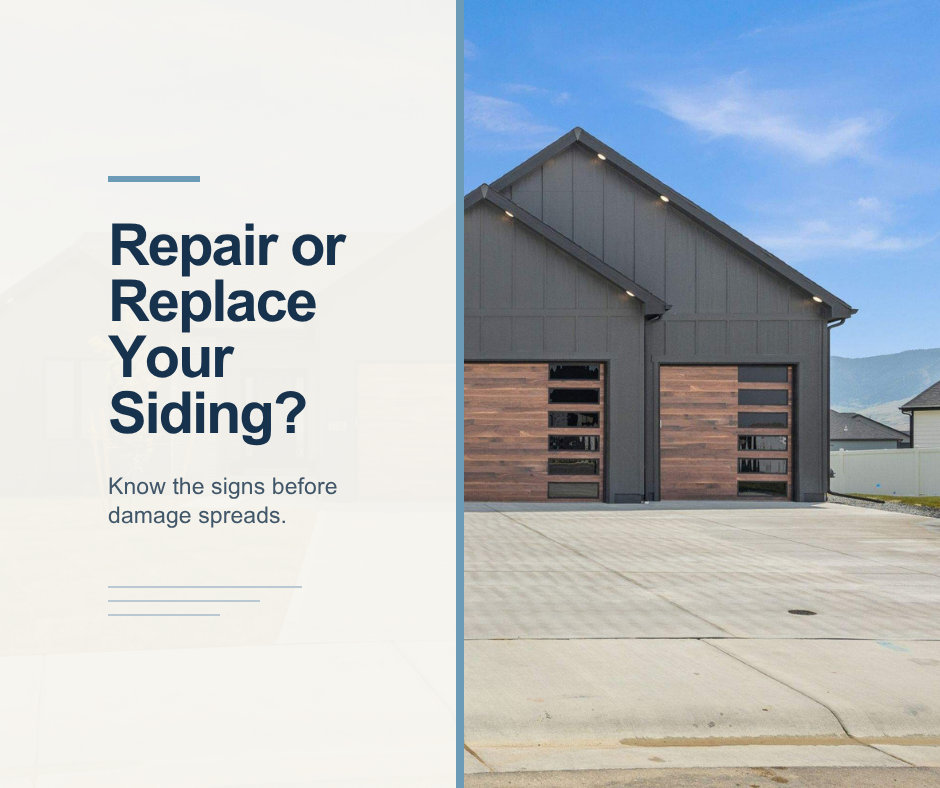
A practical guide to siding damage, moisture concerns, recurring maintenance, comfort issues, and choosing the right scope for your home.
A damaged panel does not always mean your entire exterior needs to be replaced. At the same time, a small-looking crack can sometimes be the visible clue to a larger moisture or installation problem. For homeowners comparing siding repair in Casper with a full exterior update, the right decision depends on the location, pattern, cause, and extent of the damage—not simply the age of the siding.
Wyoming conditions make that evaluation especially important. Strong wind, hail, intense sun, blowing dust, snow, and repeated temperature swings can expose weak fasteners, brittle material, failed joints, and vulnerable transitions around windows, doors, rooflines, and utility penetrations. A qualified siding replacement contractor in Casper, WY should look at the cladding and the wall system behind it before recommending a scope.
What Siding Is Really Protecting
Siding is the visible outer layer of a larger exterior wall assembly. It sheds most rain and snow, protects more sensitive materials from sunlight and impact, and gives the home its finished appearance. Behind it, flashing, a weather-resistive barrier, sheathing, insulation, framing, and interior finishes work together to manage water, air, and heat.
That distinction matters because siding is not intended to be the only waterproof layer. The U.S. Department of Energy’s Building America Solution Center explains that a drainage plane behind exterior cladding helps block moisture that gets past the siding and directs it safely down and away from the wall. If the problem is limited to one panel, a targeted repair may restore that outer layer. If flashing, drainage, or sheathing has failed across a larger area, surface repair alone may not solve the cause.
Signs a Siding Repair May Be Enough
Repair is often the most practical option when the damage is isolated, the surrounding installation is performing well, and compatible replacement material is available. Examples include:
One or two cracked, punctured, dented, or wind-loosened panels in a clearly defined area.
A small section damaged by a branch, grill heat, equipment, or a localized hail impact.
Loose trim, an open joint, or failed sealant at a specific penetration that can be corrected without disturbing a broad wall area.
Limited paint failure or surface wear on otherwise sound wood or engineered-wood siding.
An isolated moisture entry point with a confirmed source that can be repaired, dried, and verified.
A repair area where the same profile, thickness, texture, and color can still be matched acceptably.
A good repair addresses more than appearance. The contractor should identify why the damage occurred, inspect the surrounding wall, replace or refasten material according to the product requirements, restore flashing or water-management details where needed, and leave the assembly able to drain and dry. Simply covering a symptom can make the next repair more expensive.
Signs Replacement Deserves Serious Consideration
Broader siding replacement may be more practical when the problem is widespread, recurring, or tied to the wall assembly rather than a single piece of cladding. Warning signs include:
Cracking, warping, buckling, rot, delamination, fading, or impact damage on multiple elevations.
Repeated leaks or stains near several windows, doors, corners, roof-to-wall intersections, or utility penetrations.
Soft sheathing, fungal growth, musty odors, peeling interior finishes, or insulation that has been wet.
Brittle or discontinued siding that breaks during removal or cannot be matched without a patchwork appearance.
Frequent repairs and repainting that continue to consume time and money without improving overall performance.
A planned wall upgrade that requires broad access for new flashing, a weather-resistive barrier, air sealing, or continuous insulation.
Replacement does not have to mean every exterior surface is automatically removed. Some homes have one highly exposed elevation that has aged faster than the others. The scope should follow verified conditions, transitions, and material compatibility. A careful evaluation may support one wall, several elevations, or the full house.
Moisture Is Often the Dividing Line
Visible siding damage is important, but moisture behind the siding is usually the issue that most changes the decision. Look for swelling, softness, dark staining, peeling paint, persistent mildew, interior discoloration, damp insulation, or repeated caulk failure. Pay close attention below windows, at deck connections, near hose bibs and vents, under roof edges, and where one exterior material meets another.
The U.S. Environmental Protection Agency emphasizes that mold control begins with moisture control. If water is entering the wall, the source must be corrected and affected materials must be evaluated rather than concealed. A small repair can be appropriate when the pathway is isolated and the wall can be opened enough to confirm sound, dry conditions. Wider removal may be necessary when the moisture pattern extends beyond the visible defect.
Flashing and drainage details are especially important. Building America guidance notes that windows, doors, penetrations, wall bottoms, roof intersections, and cladding transitions are common leak locations. These components must work together so water is directed away from sheathing and framing and the assembly can dry after it gets wet.
Comfort and Energy Concerns: Look Beyond the Cladding
Cold rooms, drafts, uneven temperatures, and high heating bills sometimes appear at the same time as aging siding, but new siding by itself is not an automatic energy upgrade. Comfort problems may come from air leakage, missing or compressed insulation, poorly sealed penetrations, or thermal bridging through the wall framing.
The U.S. Department of Energy notes that air sealing can improve comfort, durability, indoor conditions, and heating and cooling efficiency. When a larger siding project exposes the wall, homeowners may have a valuable opportunity to inspect sheathing, improve air-sealing details, and consider exterior insulation where it fits the home and the selected cladding system. Those improvements should be designed as a coordinated wall assembly so moisture can still drain and dry.
For a small siding repair, it usually does not make sense to promise a dramatic energy benefit. For a full replacement, ask the contractor to explain which layers will be changed, how openings and penetrations will be detailed, and what measurable performance improvement the proposed scope is intended to support.
The Existing Siding Material Changes the Answer
Vinyl and polymeric siding
Individual panels can often be replaced when the material remains flexible and a compatible profile is available. Repair becomes harder when sun exposure has changed the color, the product is brittle, or the original profile is discontinued. Buckling may point to fastening or expansion-clearance problems rather than a defective panel alone.
Wood and engineered-wood siding
Localized boards may be repairable when decay is limited and the moisture source is corrected. Widespread paint failure, open end grain, repeated swelling, or rot across several courses can justify a broader scope. Surface preparation, clearances, end sealing, flashing, and finish maintenance are central to long-term performance.
Fiber-cement siding
Cracked or impact-damaged boards may be replaceable, but handling, fastening, joint layout, clearances, and manufacturer-specific installation details matter. Widespread improper fastening, insufficient clearances, or poorly detailed penetrations can make isolated cosmetic repairs inadequate.
Metal and other claddings
Dents, scratches, corrosion, loose fasteners, and panel distortion should be evaluated based on the exact system. Concealed-fastener panels, interlocking profiles, and specialty finishes may require removal beyond the visibly damaged area to complete a durable repair.
How a Professional Siding Evaluation Should Work
A useful inspection should turn visible symptoms into a clear, defensible scope. That typically includes:
Walk every elevation and record the location, type, and pattern of visible damage.
Inspect vulnerable transitions around windows, doors, decks, roofs, corners, utility penetrations, and the bottom edge of the wall.
Check for movement, softness, staining, open joints, failed coatings, and evidence of moisture inside when accessible.
Determine whether the damage is material-related, impact-related, installation-related, or caused by another building component.
Verify whether compatible replacement material and finish matching are realistic.
Compare a targeted repair with the broader work required to correct underlying flashing, drainage, sheathing, air-sealing, or insulation concerns.
Homeowners should receive more than a square-foot price. Ask for the proposed removal limits, materials, flashing and weather-barrier work, trim treatment, disposal, finish expectations, schedule assumptions, and how concealed damage will be handled if it is discovered.
Planning Siding Work in Casper
Before work begins, confirm permit requirements with the City of Casper Building and Inspections Division. The city’s published guidance states that permits must be obtained before remodeling, altering, or repairing an existing structure. The exact requirements can depend on the project scope, location, and whether related structural, electrical, or other work is involved.
Timing also matters. Exterior work needs safe access, appropriate temperatures for sealants and coatings, protection for exposed wall areas, and a plan for Wyoming wind. The contractor should explain how the home will be kept weather-tight between removal and installation and how landscaping, windows, doors, utilities, and occupied areas will be protected.
Questions to Ask Before Choosing Repair or Replacement
What caused the damage, and how was that cause confirmed?
Is the problem limited to the siding, or are flashing, sheathing, insulation, or framing affected?
Can the existing profile and color be matched closely enough for the repair location?
Which elevations truly need work, and what evidence supports that scope?
How will water drain behind the new or repaired cladding?
What manufacturer instructions and local requirements apply?
What happens if concealed damage is found after removal begins?
How will the estimate distinguish required repairs from optional upgrades?
A Practical Decision Rule
Repair usually makes sense when damage is local, the surrounding wall is sound, the cause can be corrected, and the repair can integrate cleanly with the existing system. Replacement becomes more compelling when damage is widespread, moisture is recurring, materials are brittle or unavailable, multiple repairs have already failed, or the wall must be opened to correct broader performance problems.
The goal is not to choose the largest project. It is to choose the smallest complete solution—one that fixes the cause, restores the wall’s ability to manage water and air, and produces a durable, intentional exterior.
If you are unsure whether damaged siding needs a focused repair or a broader replacement, Skyline Construction can evaluate the visible conditions, discuss the likely wall-system concerns, and help define a practical scope for your Casper home.
Skyline Construction LLC
Call: (307) 225-9399
Visit: https://www.skyline307.com/
Email: info@skyline307.com
Visit us: 259 S Center, Ste 201, Casper, WY 82601