
How to Choose a General Contractor in Casper, Wyoming
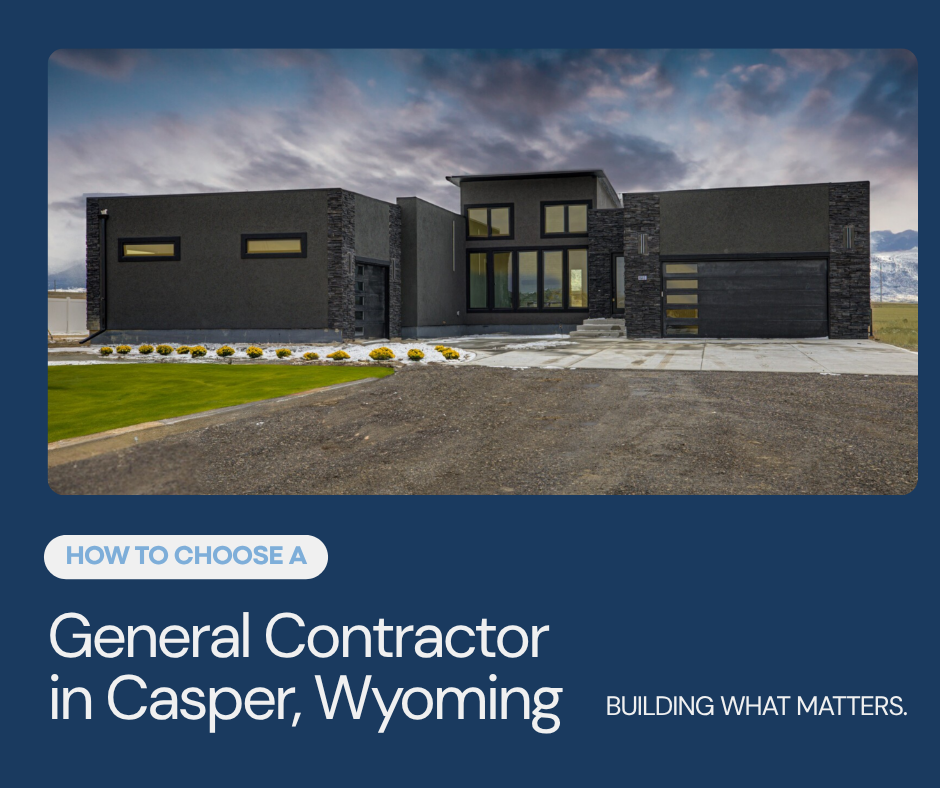
Choosing a general contractor is one of the most important decisions in a construction or remodeling project. The right contractor does more than provide labor. They coordinate scope, schedules, trades, materials, permits, documentation, inspections, site conditions, and communication from the early planning stages through completion.
A polished proposal is not enough by itself. Homeowners and property owners should compare qualifications, project experience, management practices, and contract details. Use this checklist when evaluating a general contractor in Casper, Wyoming.
Confirm licensing, bonding, and insurance
Ask the contractor to explain the licensing and insurance that apply to the work. Requirements can differ based on the location and type of project, so confirm that the contractor is properly qualified for your specific scope.
Insurance should be current and appropriate for the work being performed. If subcontractors will be involved, ask how their qualifications and coverage are handled. A professional contractor should be willing to discuss this documentation clearly.
Look for relevant local experience
A contractor may produce excellent work in one category and have limited experience in another. Review projects that resemble yours in size, complexity, materials, and location. For a custom home, look at completed homes and active construction. For remodeling, examine before-and-after work and ask how occupied spaces were managed. For roofing or exterior work, look for experience with the proposed systems.
Local experience matters in Casper and Natrona County. Weather, building codes, permitting, suppliers, trade availability, rural access, and site conditions can all affect the plan. A contractor familiar with the area is better positioned to anticipate those factors.
Compare complete scopes—not only prices
Two proposals with different totals may not include the same work. Review demolition, site preparation, structural work, materials, allowances, fixtures, equipment, permits, cleanup, disposal, protection, supervision, and warranty terms.
Ask what is specifically excluded. Confirm who is responsible for design, engineering, utility coordination, product selections, and owner-supplied materials. A detailed scope helps prevent misunderstandings and makes comparisons more meaningful.
Be cautious when one price is dramatically lower without a clear reason. The difference may reflect missing work, lower material allowances, or assumptions that will become change orders later.
Ask who will manage the project
Find out who will be your primary contact and who will manage the site day to day. Ask how subcontractors are scheduled, how quality is reviewed, how questions are documented, and how often you should expect updates.
Dedicated project management is particularly important when several trades must work in sequence. Delays and rework often occur when decisions, materials, and site conditions are not coordinated in advance.
Understand the schedule
A responsible contractor should explain the expected sequence and the factors that could affect timing. Weather, permitting, inspections, material lead times, owner selections, concealed conditions, and requested changes can all influence the schedule.
Treat an early schedule as a planning tool, not an unconditional promise. Ask how progress will be communicated and what happens when a delay or scope change occurs. Transparent communication is more valuable than an unrealistic completion claim.
Review payment and change-order procedures
The contract should identify the price structure, payment schedule, allowances, and conditions for additional work. Payments should be tied to clear contract terms or progress milestones.
Ask how change orders are priced and approved. Changes should be documented before the related work proceeds whenever possible, including the effect on cost and schedule. Avoid relying on informal conversations for decisions that alter the contract.
Evaluate communication before signing
Pay attention to the contractor’s communication during the estimating process. Do they answer questions directly? Do they explain assumptions? Are documents organized? Do they follow up when promised?
Construction involves decisions and occasional surprises. A contractor who communicates clearly at the beginning is more likely to maintain a transparent process when the project becomes busy.
Ask about quality control and warranties
Discuss how work is reviewed before it is covered or considered complete. Ask who handles punch-list items and how warranty requests are submitted. Warranty language should be written and specific about coverage, duration, exclusions, manufacturer responsibilities, and the owner’s maintenance obligations.
No contractor can responsibly promise that a building component will never need adjustment or maintenance. The goal is a clear process and realistic expectations.
Review safety, cleanliness, and property protection
For remodeling and occupied-property work, ask how the contractor will manage dust, access, temporary barriers, pets, children, deliveries, utilities, and daily cleanup. For exterior or new-construction work, discuss staging, equipment, neighbor access, and site security.
These practices affect the experience of the project and often reflect the contractor’s overall level of organization.
Trust clarity over pressure
A good contractor should give you enough information to make an informed decision. Be cautious with unclear scopes, high-pressure tactics, large undocumented changes, or promises that sound too certain for the stage of planning.
The strongest relationship begins with shared expectations: what will be built, how decisions will be made, who is responsible, how communication will work, and what the contract includes.
Work with a local construction partner
Skyline Construction is a licensed, bonded, and insured general contractor serving Casper, Mills, Evansville, Bar Nunn, Alcova, Midwest, and nearby rural communities. Our work includes custom homes, residential construction, remodeling, roofing, exteriors, and commercial projects, supported by local knowledge, dedicated project management, transparent communication, and craftsmanship built to last.
Call (307) 225-9399
email info@skyline307.com
Find us at 1971 E Yellowstone Hwy, Casper, WY 82601
Visit us at skyline307.com