
Is It Too Late to Paint Outside? Fall Exterior Painting Conditions in Casper
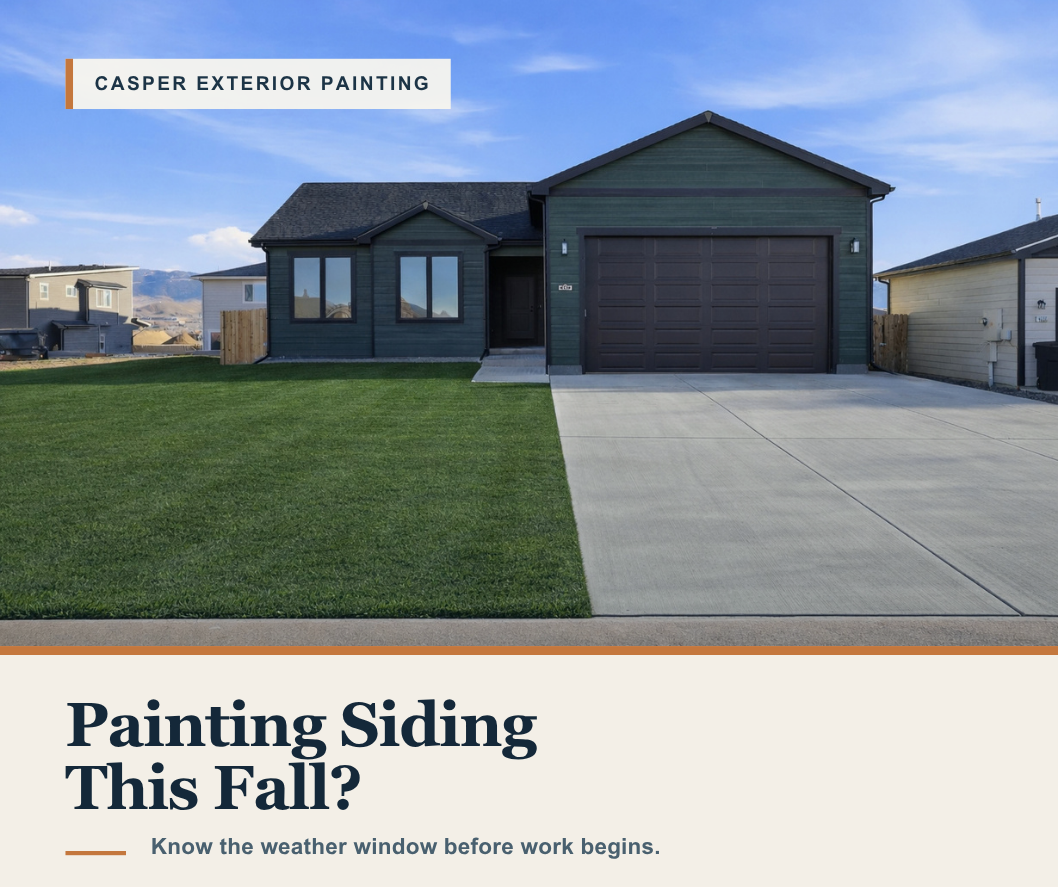
How temperature, moisture, daylight, preparation, and curing determine whether the work should proceed
The Calendar Does Not Make the Decision—Conditions Do
A warm September afternoon can make exterior painting feel straightforward, but fall weather in Casper can change quickly. A successful project depends on more than the daytime high. Air temperature, surface temperature, overnight lows, moisture, wind, direct sun, product requirements, preparation, and drying time all influence whether the coating can form a durable film.
So, is it too late to paint outside? Not automatically. Some fall days provide workable painting conditions, while others create too much risk. The right decision comes from evaluating the complete weather window and the actual surface—not simply checking the month.
Before scheduling exterior painting, review the factors below with a contractor who understands Casper’s temperature swings, wind, and short fall workdays.
1. Air Temperature Is Only the Starting Point
Every primer, paint, and specialty coating has a manufacturer-specified application range. The relevant temperature is not only the forecast high. Conditions must remain within the product requirements while the coating is applied and during its initial drying and curing period.
A mild afternoon can be surrounded by a freezing night and a cold morning. If temperatures fall too quickly after application, the paint may not level, adhere, or cure as intended. Starting too early can create the same problem when the wall has not warmed from the overnight low.
The safest approach is to match the product, substrate, and full weather window. A contractor should review the label and technical data rather than rely on a single universal temperature rule.
2. Surface Temperature Can Differ From the Forecast
Exterior paint bonds to the surface, not to the air. Siding, stucco, trim, metal, masonry, and shaded walls can remain much colder than the surrounding air. Dark surfaces in direct sun may become significantly warmer than the forecast.
North-facing walls often warm slowly in fall. Metal components can cool rapidly. Masonry may hold moisture and respond differently than wood or engineered siding. Contractors may use an infrared thermometer or surface probe to confirm conditions at the wall before and during application.
A surface that feels cool is not a reliable measurement. Temperature should be checked where the paint will actually be placed, including shaded elevations and areas close to the ground.
3. Dew, Frost, and Moisture Can Stop the Work
Paint needs a clean, dry surface. Morning dew, overnight frost, recent precipitation, sprinklers, pressure washing, and moisture inside porous materials can interfere with adhesion and finish quality.
Fall creates a narrow moisture window. A wall may look dry by midmorning, but shaded joints, lower siding courses, cracks, and horizontal surfaces can retain water. In the evening, dew can form before the coating has had enough time to dry.
Before painting, check for:
Visible dew, frost, rain, or snow on the surface
Moisture trapped in cracks, joints, end grain, or masonry
Wet landscaping or sprinklers that can spray the work area
Condensation on metal, windows, or shaded walls
A forecast that brings precipitation before the coating can dry
If moisture is present or likely to return too soon, the work should wait.
4. Wind Changes Application and Drying
Casper wind affects more than comfort. Strong wind can carry dust and debris into wet paint, make spray control difficult, increase overspray risk, and cause the surface to dry unevenly. It can also cool walls and shorten the practical application window.
A calm-looking street does not guarantee the upper elevations are calm. Rooflines, corners, and gaps between buildings can accelerate airflow. Contractors should evaluate the immediate work area, protect nearby vehicles and property, and choose an application method appropriate for the conditions.
5. Direct Sun Can Make a Cool Day Too Hot
Fall air can feel cool while direct sun heats a dark wall well beyond the ideal range for the coating. Painting a hot surface may cause the material to dry too quickly, making lap marks, poor flow, or uneven appearance more likely.
Professional crews often follow the shade around the building rather than painting every elevation at the same time. The goal is a stable surface temperature and enough working time for the product to form correctly.
6. Preparation Matters More as the Season Narrows
Cold weather is not a reason to shorten preparation. Loose paint, chalk, dirt, mildew, failed caulk, open joints, rust, damaged wood, and deteriorated stucco must be addressed before coating.
The preparation plan may include cleaning, scraping, sanding, spot priming, repairing damaged material, replacing failed sealant, protecting adjacent surfaces, and allowing washed or repaired areas to dry. Each step takes time, and some repair products have their own temperature and cure requirements.
A rushed fall project can fail before the first finish coat if damp or unstable material is covered. When the remaining weather window cannot support proper preparation, postponing the coating is usually better than compressing the process.
7. Drying Time and Curing Time Are Not the Same
Paint may feel dry to the touch before it has developed enough strength to resist cold, moisture, abrasion, or a second coat. Recoat time and early cure can change with temperature, humidity, film thickness, color, airflow, and substrate.
Fall planning should leave enough daylight and stable weather for each coat. It should also account for the product’s required time before overnight temperatures drop, dew forms, or precipitation arrives. A second coat should not be scheduled merely because the first surface feels dry.
8. Different Exterior Materials Need Different Plans
A home’s exterior may combine wood, engineered siding, fiber cement, stucco, masonry, metal, doors, fascia, and trim. These materials absorb heat and moisture differently and may require different primers, preparation, and application methods.
Pay special attention to repairs and transitions. Fresh stucco or masonry may need adequate curing before coating. Bare wood needs appropriate primer and dry conditions. Metal may require rust treatment and a compatible primer. Existing coatings should be evaluated for adhesion and compatibility.
A contractor should identify the substrate before selecting the system. The best fall paint schedule cannot compensate for the wrong product or incomplete preparation.
A Practical Fall Painting Day in Casper
A workable day often begins with inspection rather than immediate application. The crew confirms that surfaces are dry, measures temperatures, checks wind and precipitation, and reviews the coating’s requirements. Painting may begin later on shaded or slow-warming walls and stop early enough to protect the drying window.
The day’s sequence may include:
Morning inspection of dew, frost, surface temperature, and wind
Preparation and masking while surfaces warm and dry
Application on the elevation with the most stable conditions
Regular checks as sun, shade, and wind shift
Stopping with enough time for the coating to set before evening
Protecting materials and equipment from overnight cold
This measured approach may produce fewer painting hours per day, but it supports a more reliable result.
When the Project Should Wait Until Spring
Exterior painting should be postponed when the product cannot remain within its required conditions, surfaces stay damp, nighttime temperatures fall too quickly, the repair scope is too large for the remaining weather window, or wind and precipitation make controlled application unlikely.
Postponing the finish coat does not mean ignoring the exterior. Critical repairs, temporary protection, or limited weatherproofing may still be appropriate before winter. The contractor should distinguish urgent protection from work that needs a longer, more stable painting season.
Questions to Ask an Exterior Painting Contractor
Which coating system fits each exterior material?
What air and surface temperature range does the manufacturer require?
How will temperature and moisture be checked during the day?
How much drying time is needed before the evening temperature drop?
How will wind, overspray, landscaping, and nearby property be managed?
What repairs and preparation are included in the scope?
What conditions would cause the crew to pause or reschedule?
How will incomplete elevations be protected if the weather changes?
Frequently Asked Questions
Can exterior paint be applied when the afternoon is warm but the night is cold?
Possibly, but the decision depends on the specific product, surface temperature, humidity, and how long conditions will remain suitable after application. The technical requirements for the selected coating should control the schedule.
Can a wall be painted as soon as morning frost disappears?
Not necessarily. The surface must be fully dry and warm enough for the coating. Moisture may remain in joints, porous materials, shaded areas, and lower sections after visible frost is gone.
Does low-temperature paint make every fall day suitable?
No. A product designed for cooler application still has limits. Moisture, wind, surface condition, preparation materials, overnight lows, and drying time remain important.
Should the house be pressure-washed immediately before painting?
Cleaning may be part of preparation, but washed surfaces need enough time to dry. In cool fall weather, drying can take longer, especially in shade or on porous materials.
Evaluate the Whole Weather Window
Fall exterior painting in Casper can be successful when the surface is properly prepared and the complete application window meets the coating requirements. The right plan measures actual conditions, follows product instructions, and leaves enough time for every coat to dry before cold, dew, or precipitation returns.
Contact Skyline Construction to evaluate fall painting conditions for your Casper property and develop a practical scope for repairs, preparation, and coating.
Skyline Construction LLC
Call: (307) 225-9399
Email: info@skyline307.com
Visit us at 259 S Center, Ste 201, Casper, WY 82601
Visit: https://www.skyline307.com/